
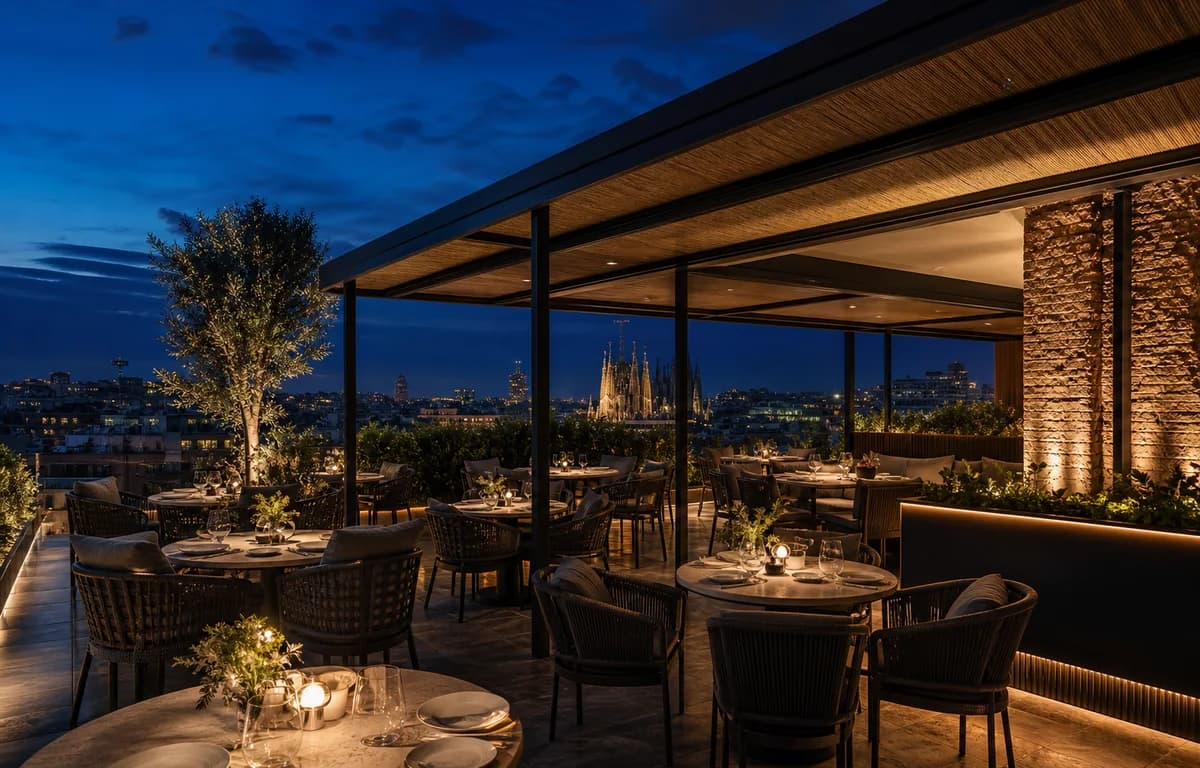
Restaurant lighting has to respond to daylight, service rhythm, food presentation and brand atmosphere without asking staff to manage dozens of circuits.
Design layers before scenes
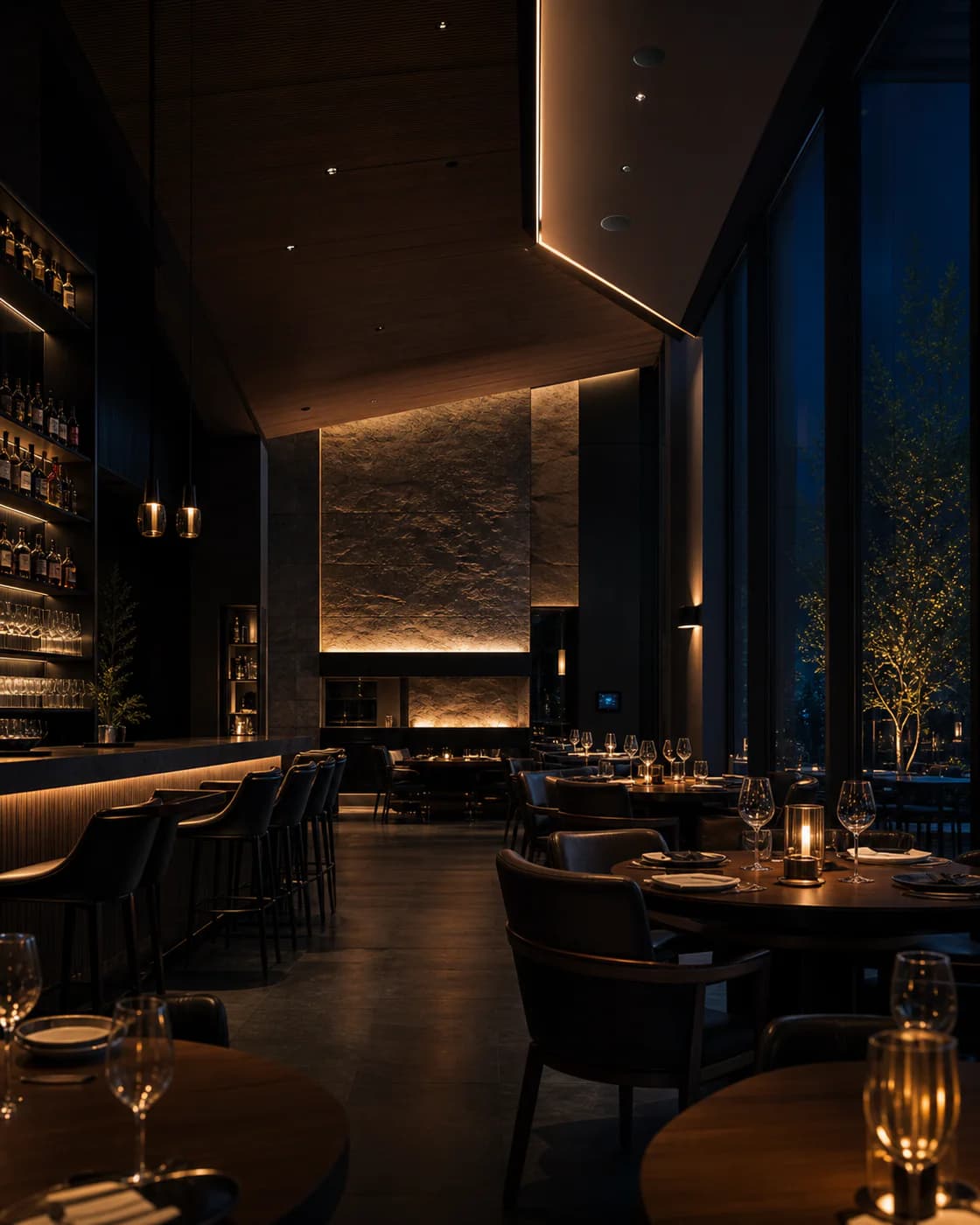
Ambient, table, architectural and decorative lighting each have a different job. Scene programming is effective only after those layers are independently controllable.
- Separate food and face lighting
- Preserve architectural emphasis
- Coordinate exterior and arrival lighting
Map the complete service day
Lunch, transition, dinner, events, cleaning and closing require different priorities. Interviewing operations early prevents presets that look good but fail in daily use.
“The best scene is not the most dramatic one — it is the one the service team can recall reliably at the right moment.”
Commission in the real environment
Final levels and colour temperatures should be tuned with furniture, finishes and table settings installed, then reviewed during actual service conditions.
- Record every approved scene
- Limit staff controls to meaningful actions
- Review seasonal daylight changes